
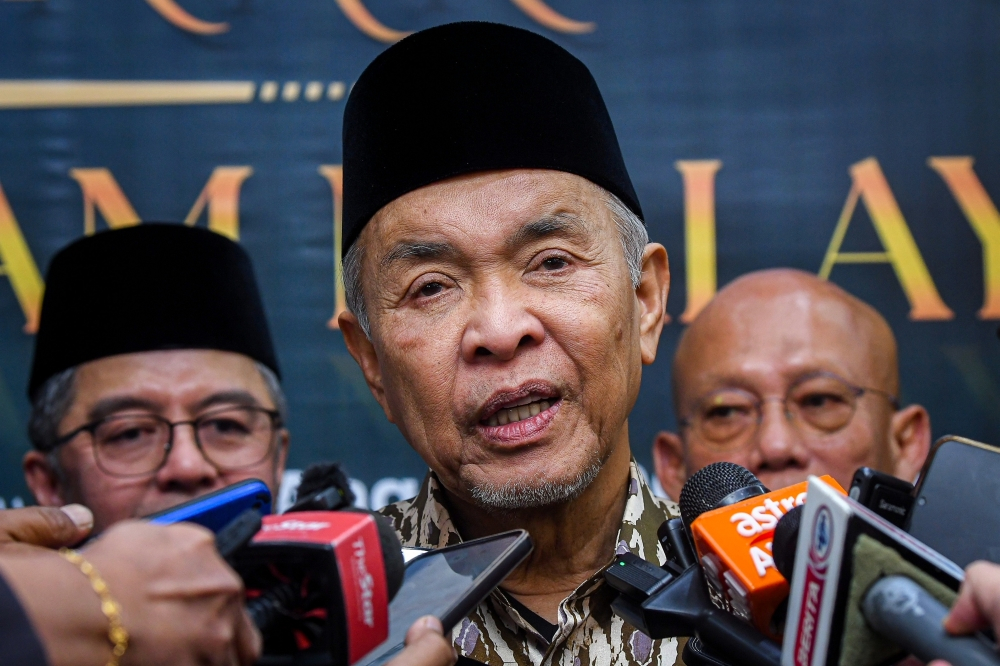
The Federal Court's latest ruling in Ahmad Zahid Hamidi's 47-charge case has renewed questions about prosecutorial discretion, judicial oversight and Malaysia's proposed separation of the Attorney-General and Public Prosecutor roles.
On October 8, the Federal Court granted Zahid and the Attorney-General leave to appeal against a Court of Appeal decision allowing the Malaysian Bar to challenge the prosecution's decision to discontinue proceedings involving Yayasan Akalbudi funds.
The court has yet to decide the substantive appeal.
Zahid received a discharge not amounting to an acquittal (DNAA) in September 2023 after the prosecution discontinued all 47 charges involving corruption, criminal breach of trust and money laundering.
The High Court rejected the Bar's application in June 2024, but the Court of Appeal overturned that decision in May 2026, allowing the challenge to proceed.
The Federal Court's latest ruling means the legal dispute will continue, not that the prosecution's decision has been found lawful or unlawful.
At the heart of the case is Article 145(3) of the Federal Constitution, which empowers the Attorney-General to institute, conduct or discontinue criminal proceedings.
Prosecutorial discretion is necessary. Prosecutors must be able to assess evidence and make decisions without political pressure or public demands dictating the outcome.
However, independence should not automatically place those decisions beyond scrutiny.
Judicial review examines whether a decision was made within the law; it does not simply allow courts to substitute their preferred prosecutorial outcome.
The unresolved question is when a decision to discontinue proceedings can legitimately be challenged and what legal threshold such a challenge must meet.
An overly restrictive threshold could limit scrutiny of potentially unlawful decisions, while an overly permissive one could expose prosecutors to excessive litigation.
The objective should be to protect independent decision-making while preserving a clear legal avenue for challenging decisions that may exceed lawful authority.
This question is particularly relevant as Malaysia pursues reforms to separate the Attorney-General's legal advisory functions from the Public Prosecutor's prosecutorial powers.
Proposals have included changes to appointment procedures, a fixed seven-year term for the Public Prosecutor and a code of ethics.
Separating the two roles could strengthen institutional independence, but structural change alone cannot guarantee accountability.
An independent Public Prosecutor would still wield significant power over whether criminal proceedings begin or end.
Clear rules on decision-making, ethical standards and appropriate oversight are therefore essential to ensure that independence does not become insulation from scrutiny.
Zahid's case illustrates why prosecutorial reform must address more than who holds the office. It must also establish how that power is exercised and the circumstances in which decisions can be challenged.
The Federal Court has yet to determine the substantive appeal, and the latest ruling does not establish wrongdoing by the prosecution.
Nevertheless, the case raises a question central to public confidence in the justice system. How can Malaysia protect prosecutorial independence while ensuring that the power to discontinue a prosecution remains subject to appropriate legal checks?
The answer will depend not only on the court's interpretation of the Constitution, but also on whether Malaysia's wider reform efforts establish meaningful safeguards.
Separating the offices may change the institutional structure; ensuring accountability will require clear rules governing the power itself.