
Walk into almost any fast fashion store today and you will be offered a paper bag. It is certified. It is recyclable. It is part of a broader sustainability commitment. The cashier will charge you for it, and the company will count it as a win.
What the company will not show you is the back room.
The Water You Don't See
The fashion industry is the second-biggest consumer of water on the planet, after agriculture. It uses approximately 93 billion cubic metres of water annually – enough to meet the needs of five million people. A single cotton shirt requires around 700 gallons of water to produce. A pair of jeans requires a staggering 2,000 gallons. Producing one kilogram of cotton – roughly the amount needed for a single pair of jeans – requires about 7,500 to 10,000 litres of water, which is approximately ten years' worth of drinking water for one person.
The water consumption is only half the story. The other half is what happens to the water after it has been used.
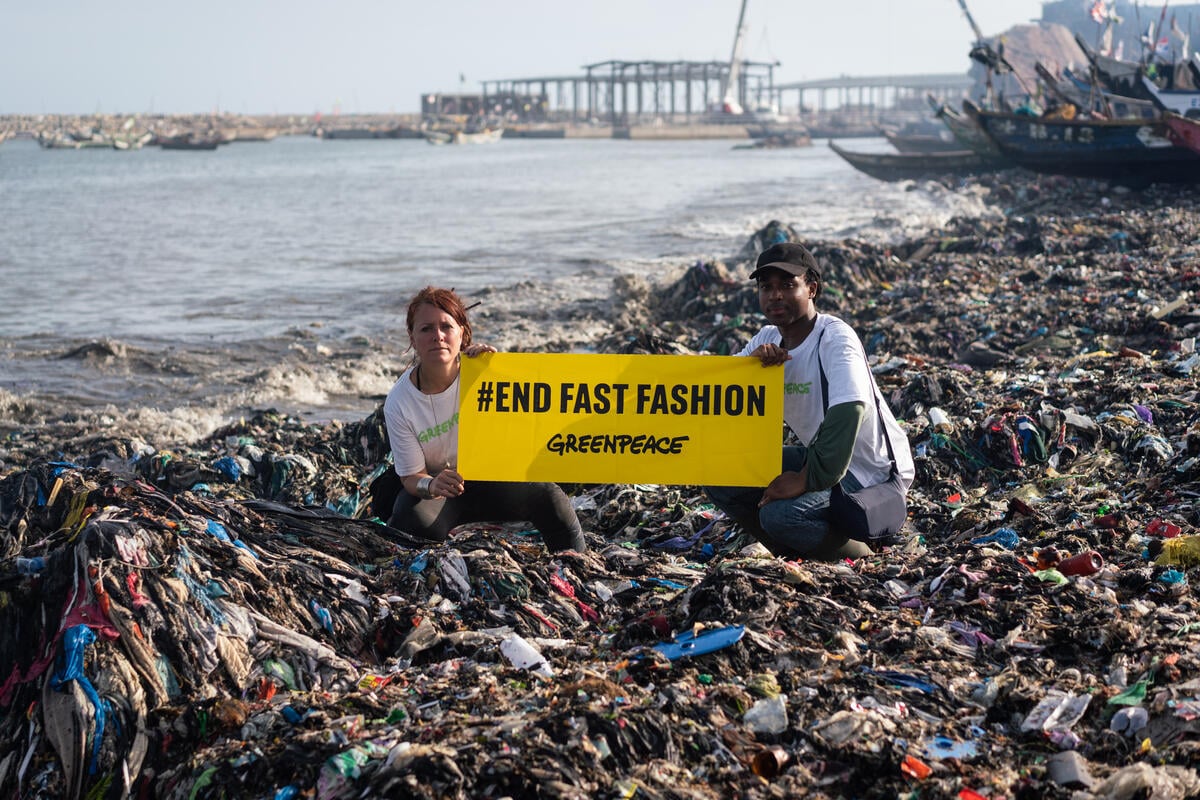
The fashion industry accounts for nearly 20 percent of global wastewater. Dyeing and finishing processes in textile manufacturing generate enormous volumes of wastewater, with chemicals and pollutants contaminating and drying up local water sources, impacting ecosystems and human health.
The dyeing process for fabrics, which uses toxic chemicals, is responsible for 17 to 20 percent of global industrial water pollution. Seventy-two toxic chemicals have been found in the water used in textile dyeing. These chemicals include heavy metals, synthetic compounds, and per- and polyfluoroalkyl substances (PFAS) – the so-called "forever chemicals" used for waterproofing, oil resistance, and antibacterial properties. A 2026 study of textile dyeing plants found PFAS concentrations in receiving river samples ranging from 341.3 to 713.4 nanograms per litre, with perfluorooctane sulphonate and other PFAS compounds identified as priority substances by risk evaluation.
The discharge of untreated dye effluents into rivers and lakes reduces light penetration, disrupts photosynthesis, and leads to oxygen depletion, harming aquatic flora and fauna. In Tirupur, India, the Noyyal River has been devastated by textile industry pollution, with textile dyes, heavy metals, and organic compounds identified as the primary contaminants affecting the ecosystem and public health.
The Microplastic Problem
There is another form of water pollution that is invisible to the naked eye but accumulating in every ocean on Earth.
Synthetic textiles are the single largest source of primary microplastics entering the world's oceans, responsible for an estimated 35 percent of total oceanic microplastic release. Every polyester shirt, every nylon activewear piece, every blended knit sheds microfibers during routine wear and washing. These particles do not biodegrade. They slip through wastewater treatment infrastructure, travel through freshwater systems, and ultimately accumulate in the ocean, where they remain for decades.
The scale is staggering. Approximately 500,000 tonnes of microfibres – the equivalent of 50 billion plastic bottles – are released into the ocean every year from washing clothes. The United Nations has noted that this is equivalent to three million barrels of oil being dumped into the ocean annually.
And this pollution is not confined to the ocean. Microplastics have been detected in air, soil, and drinking water. They have been identified in human lungs, blood, the placenta, and the brain. A 2025 study of 40 human brain samples found that microplastic concentrations measured in 2024 were roughly 50 percent higher than those recorded in 2016. Researchers are careful to note that these findings do not establish direct causation, but the trajectory is unmistakable.
The Industry Pattern
H&M has pledged to use only recycled or sustainably sourced materials by 2030 and has introduced garment collection programmes in many markets. Yet the company produces billions of garments annually, and its supply chain remains heavily dependent on virgin materials and fossil-fuel-derived synthetic fibres. Zara, owned by Inditex, has committed to using 100 percent sustainable cotton, linen and polyester by 2025. But Zara also releases thousands of new designs every year, a business model built on speed and volume. Shein produces tens of thousands of new items daily and ships them directly to consumers in individual plastic packages. The company has faced repeated investigations into labour practices and environmental claims.
The pattern is consistent across the industry. Brands change the things customers can see – paper bags, in-store recycling bins, sustainability labels – and keep the things they cannot see. The plastic sleeves. The bulk shipping bags. The synthetic fibres. The production volumes that make genuine sustainability impossible.
The Scale of the Problem
The fashion industry is responsible for about 10 percent of global carbon emissions – more than all international flights and maritime shipping combined. It consumes 93 billion cubic metres of water annually. It is the second-biggest consumer of water on the planet, after agriculture. And 85 percent of all textiles produced each year end up in landfills or incinerators.
The pollution comes from every stage of production. Dyeing and finishing account for 36 percent of the industry's global pollution impact. Yarn preparation accounts for 28 percent. Fibre production accounts for 15 percent. Cotton cultivation is a massive drain on freshwater resources, and the energy-intensive processes used in dyeing and finishing rely heavily on fossil fuels. Cotton production also uses high amounts of fertilizers and pesticides, discharging toxic substances into waterways.
Then there is the waste that never makes it to a store shelf. The equivalent of one garbage truck full of clothes is burned or dumped in a landfill every second. People are buying 60 percent more clothes and wearing them for half as long. And approximately 60 percent of all materials used by the fashion industry are made from plastic.
The Paper Bag Theatre
This is why the paper bag at the checkout is just a theatre.
It is a visible, customer-facing gesture that allows companies to claim progress while the underlying system remains unchanged. The plastic sleeves protecting every individual garment are still plastic. The plastic bags used for bulk shipping are still plastic. The plastic hangers, the plastic security tags, the plastic film wrapping pallets – all still plastic. And the synthetic fibres shedding microplastics with every wash are still synthetic.
Companies will tell you that plastic protects product quality during transit. That is true. But it is also true that the same companies have the resources, the scale, and the supply chain influence to redesign their packaging if they chose to. They have already done so for some product lines. They could do the same for all of them. They simply have not.
What Real Change Would Look Like
If fast fashion brands wanted to genuinely eliminate plastic from their packaging and reduce their water pollution, they could.
They could invest in paper-based or biodegradable alternatives for individual garment wrapping. They could switch to reusable containers for bulk shipping instead of single-use plastic bags. They could redesign warehouse logistics to eliminate the layers of plastic that currently protect products before they even reach the store. They could adopt waterless and low-water dyeing technologies. They could invest in closed-loop water treatment systems that prevent toxic chemicals from entering rivers. They could set binding deadlines – not vague ambitions – for the complete elimination of virgin plastic from their supply chains and the reduction of their water footprint.
None of this is technologically impossible. It is expensive. It requires rethinking logistics, retraining staff, renegotiating supplier contracts, and absorbing short-term costs for long-term sustainability. It requires companies to prioritise environmental impact over quarterly margins.
The Consumer's Role
This is not an argument that consumers are powerless. Consumers can buy less. They can choose second-hand. They can demand transparency from the brands they patronise. They can refuse the paper bag and bring their own.
But the burden of systemic change cannot rest on individual choices alone. A customer who brings a reusable bag has done something positive. That customer has not solved the problem of the plastic sleeves in the back room, the toxic dyes in the river, or the microplastics in the ocean. Only the companies can solve those problems.
The Bottom Line
Fast fashion's environmental impact is not a problem that can be solved with a paper bag. It is a problem that requires fundamentally rethinking how clothes are made, shipped, sold, and discarded. The industry's water consumption is depleting freshwater resources. Its dyeing processes are poisoning rivers. Its synthetic fibres are filling the ocean with microplastics. And its business model is built on volume that makes all of this worse.
And until the industry is willing to tell the whole truth – and act on it – fast fashion will continue to be one of the planet's largest polluters, paper bags and all.