
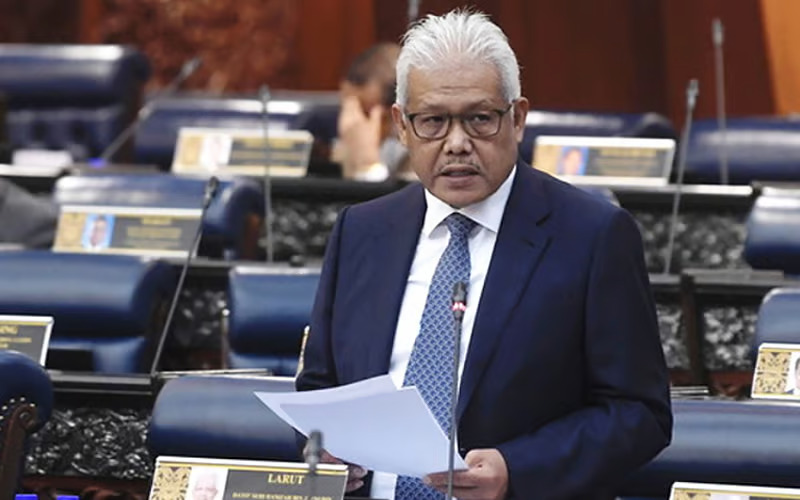
Malaysia’s debate over the Goods and Services Tax (GST) has returned to the spotlight, with Opposition Leader Hamzah Zainudin challenging the government to clarify its direction on consumption taxes.
During the Budget 2027 debate on October 12, Hamzah argued that incorporating GST elements into the existing Sales and Service Tax (SST) framework suggested weaknesses in the current system.
He urged the government to implement GST if that was its intention, rather than leave the public uncertain about the country’s tax direction.
He also alleged that Pakatan Harapan (PH) lawmakers were reluctant to support its return because they had previously opposed it.
But beyond the political dispute, the bigger question is whether Malaysia can build a tax system that generates sustainable revenue without imposing unnecessary costs on households and businesses.
The debate is bigger than GST versus SST
Malaysia needs a sustainable revenue base to fund public services and development. Consumption taxes are one way to raise that revenue, but the design of the system matters as much as the amount collected.
GST is a broad-based consumption tax that allows businesses to claim credits for eligible tax paid on business inputs.
This mechanism can reduce the cascading of taxes through supply chains, although compliance requirements can create additional administrative costs, particularly for smaller businesses.
SST operates differently. Sales tax generally applies to taxable goods at specified stages, while service tax applies to prescribed services.
Its narrower scope allows the government to exclude selected goods and services, but differences in coverage can also create uneven tax treatment across products and transactions.
Neither system is automatically more effective simply because of its name.
GST offers broader coverage and an input-tax credit mechanism, while SST allows the government to target specific categories of goods and services.
The relative merits depend on revenue needs, administrative efficiency and the economic effects of each system.
The government has indicated that it intends to retain SST while incorporating elements of GST to address cascading effects.
That is the policy issue at the heart of Hamzah’s criticism: if the government sees value in GST mechanisms, it needs to explain why incorporating selected elements into SST is preferable to restoring GST itself.
What would GST mean for households?
One of the main concerns surrounding GST is its potential impact on household spending. Lower-income households generally spend a larger proportion of their income on consumption, leaving them with less room to absorb higher prices.
Any proposal to reintroduce GST would therefore need to specify its rate, exemptions and measures to offset the additional burden on vulnerable households.
Malaysia’s existing SST framework provides a point of comparison.
In July 2025, the government expanded service tax coverage and revised sales tax arrangements as part of efforts to strengthen its fiscal position.
The Finance Ministry said essential goods and services would be protected and measures would be taken to mitigate the impact on households and businesses.
However, the impact of either system depends on its actual design and implementation. Businesses may absorb some tax-related costs, pass them on to consumers or adjust their operations. The effect on prices would vary across industries and products.
A meaningful comparison must therefore examine the expected tax burden under each system rather than assume GST is inherently better or worse than SST.
Businesses need a clear direction
Household spending is only part of the equation. Businesses also need certainty to plan their costs, investments and operations.
Hamzah argued that the government’s unclear direction on taxation could complicate business planning and confuse investors.
He also suggested that any return to GST should involve reconsidering the rate rather than automatically restoring the previous 6% rate.
That concern deserves consideration regardless of whether GST is ultimately reintroduced.
A GST system requires businesses to maintain appropriate records, manage tax invoices and comply with reporting and payment requirements.
Input-tax credits can help prevent tax from accumulating through supply chains, but registration and administrative obligations still matter.
For smaller businesses, transitioning to a different tax framework could mean new systems, staff training and accounting expenses.
The government would need to explain how implementation would be managed and whether businesses would receive sufficient time and support to adapt.
The debate should also address how each system affects tax compliance, collection efficiency and government revenue.
Without credible estimates, neither the government nor the opposition can demonstrate that its preferred approach would deliver better results.
Both sides must explain their positions
PH’s previous opposition to GST is relevant because voters deserve an explanation if the government now considers bringing it back.
But political consistency should not prevent a government from reassessing its policies when circumstances change.
If the government believes GST would improve revenue collection or address weaknesses in the current framework, it should explain what has changed since 2018 and why the proposed system would produce better outcomes today.
Retaining SST while adopting selected GST mechanisms is also a policy choice that requires justification.
The government should demonstrate whether this approach can address cascading taxes, improve administration and provide sufficient revenue without introducing unnecessary complexity.
The opposition faces a similar responsibility.
Calling for GST’s return is only the beginning of a policy argument. It must outline the proposed rate, explain how the system would operate and provide credible estimates of its expected economic and fiscal effects.
Both sides should also explain how additional tax revenue would be used.
Taxpayers need to understand not only what they are being asked to pay, but what public benefits the revenue is expected to support.
Malaysia needs answers, not another round of political blame
The GST debate should not be reduced to whether PH has contradicted its past position or whether the opposition has found an opportunity to challenge the government.
Those are political questions, but they do not determine whether a tax system is economically sound.
Malaysia needs a tax framework that can raise sufficient revenue, minimise unnecessary compliance burdens and operate efficiently.
Whether that framework involves GST, SST or further changes to the existing system should be determined through evidence and transparent public debate.
Before asking Malaysians to accept a different tax system, policymakers should explain its costs, expected revenue and implications for households and businesses.
The country does not need another political contest over who was right in 2018. It needs a serious explanation of what would work for Malaysia now.