
Penang has requested a RM2 billion federal grant to fund water treatment and distribution infrastructure under the proposed Perak–Penang Water Transfer Scheme, citing the project's importance to water security and the state's industrial competitiveness.
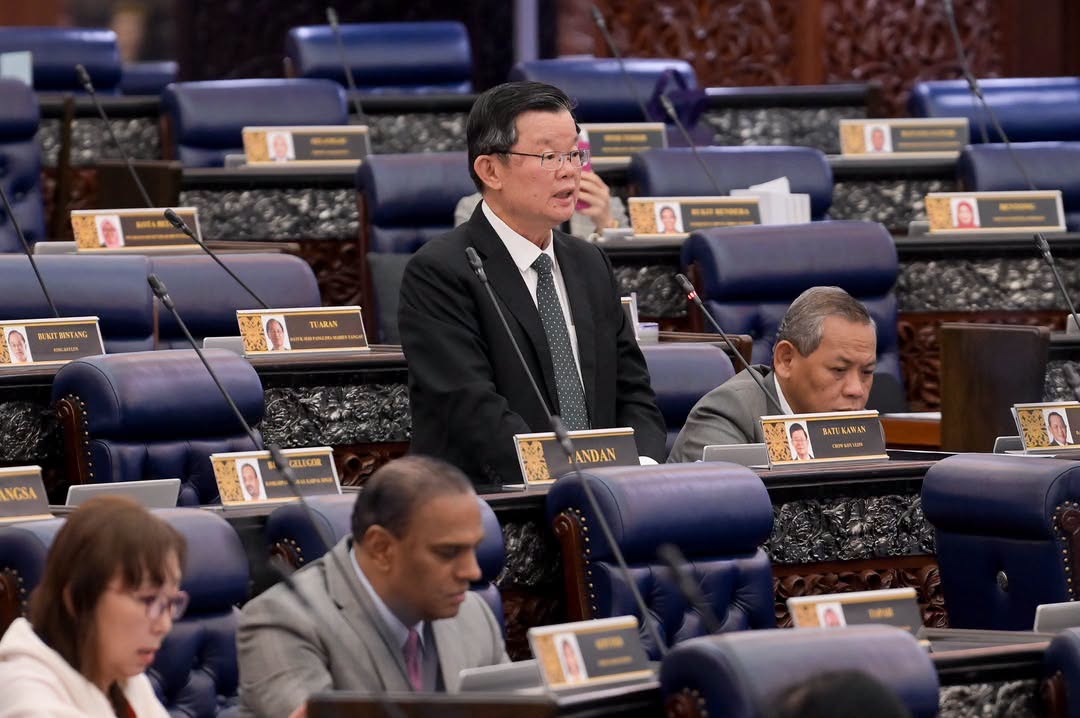
Chief Minister Chow Kon Yeow made the request while debating Budget 2027 in the Dewan Rakyat on October 14, arguing that the project should be treated as a strategic national investment rather than solely an interstate infrastructure project.
According to an engineering assessment by the Penang Water Supply Corporation (PBAPP), the project is estimated to cost RM3.5 billion, comprising RM1.5 billion for raw-water resource development in Perak and RM2 billion for water treatment and distribution infrastructure in Penang.
Chow said federal funding would help reduce the project's development costs and keep water tariffs competitive, warning that sharp increases in utility costs could affect Malaysia's attractiveness as an investment destination.
The RM2 billion grant is a funding request and has not been confirmed as an approved federal allocation.
Why Penang needs the project
The proposed scheme is intended to strengthen Penang's long-term water security by providing an additional source of supply from Perak.
Penang's water supply is heavily dependent on Sungai Muda. Developing an alternative source would help diversify supply as demand rises from households, commercial activities and industrial operations.
Reliable water supply is particularly important to Penang's electrical and electronics sector, which includes semiconductor manufacturers and their supporting supply chains.
Water constraints could affect the ability of existing businesses to expand and the state's capacity to accommodate future investment.
The project therefore addresses more than household water demand. It is also linked to the infrastructure needed to sustain Penang's industrial growth.
How the RM3.5 billion would be spent
The estimated project cost is divided between infrastructure in the two states.
Of the total RM3.5 billion, RM1.5 billion is allocated for raw-water resource development in Perak, while the remaining RM2 billion covers treatment and distribution infrastructure in Penang.
Chow's funding request specifically targets the latter component.
He said federal support was important because the project would benefit the national economy and public welfare, rather than serving only the state where the infrastructure would be built.
However, the request also raises the question of how the cost of major water infrastructure should be shared between the federal government and the states involved.
Water tariffs and industrial competitiveness
Chow warned that a substantial increase in water tariffs could weaken Penang's appeal to investors, particularly as neighbouring countries compete to attract industrial investment through competitive utility and infrastructure costs.
Water infrastructure requires significant upfront capital, and the way those costs are financed can influence the financial burden on water operators and consumers.
Federal funding could help reduce the amount that needs to be financed through other channels.
However, the eventual impact on tariffs would depend on the project's financing arrangements, operating costs and the terms under which treated water is supplied.
The government would also need to weigh the request against competing demands for federal funding and ensure that any allocation delivers value for public money.
The issue is particularly relevant to Penang's manufacturing sector, where reliable utilities and operating costs are among the considerations for businesses planning future investments.
Federal and state cooperation
Chow said Penang remained committed to working with the federal government, the Perak state government and relevant agencies to ensure the project proceeds smoothly.
The proposed grant would require federal consideration, while implementation would depend on coordination between the parties responsible for developing and operating the infrastructure.
For Penang, the immediate challenge is to secure additional water capacity without undermining the affordability of supply or the state's investment competitiveness.
Whether the federal government agrees to provide the RM2 billion grant will help determine how the treatment and distribution components are financed, as well as how the costs of supporting long-term water security are shared.