
Malaysia's implementation of the Parliamentary Services Act 2025 marks an important change in the relationship between Parliament and the executive.
After decades under an administrative arrangement that placed Parliament under the executive branch, the restoration of parliamentary services creates an opportunity to strengthen the institution responsible for scrutinising the government.
But restoring independence is only the beginning.
The real test is whether Parliament can use its greater administrative autonomy to become more effective, professional and accountable.
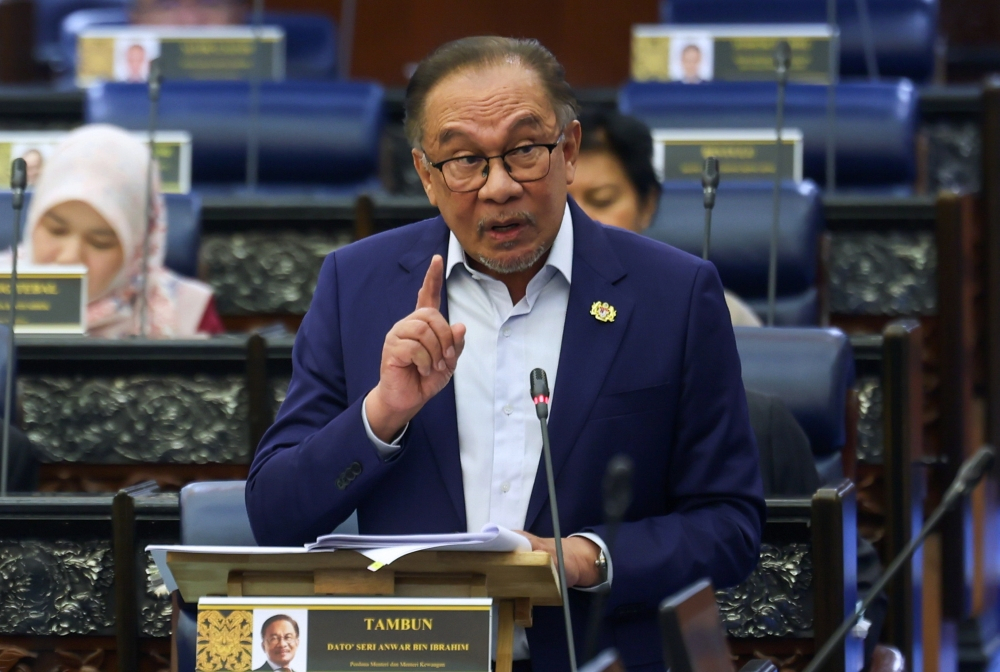
At the Administrative Transition and Institutional Reform ceremony on October 14, Prime Minister Datuk Seri Anwar Ibrahim described the Act as a cornerstone of the government's reform agenda, intended to limit powers traditionally held by the executive.
He also acknowledged that its success would depend on the credibility of parliamentary leadership and the willingness of MPs to support the reform.
That acknowledgment points to the challenge ahead: legislation can establish the conditions for institutional change, but it cannot guarantee the outcomes.
Independence must strengthen Parliament's capacity
Parliament's responsibility extends beyond debating bills and voting on government proposals.
It must also scrutinise public policies, examine government expenditure and question decisions made by the executive.
Performing these functions effectively requires more than MPs taking their seats in the chamber.
Parliament needs professional staff, reliable research support and the administrative capacity to help lawmakers examine complex legislation and policy decisions.
Greater administrative independence creates an opportunity for Parliament to develop these capabilities according to its own institutional needs.
Rather than treating administrative autonomy as an end in itself, the focus should be on whether it enables MPs to perform their duties more effectively.
This is particularly important because scrutiny requires preparation. MPs need access to relevant information and the support necessary to assess government proposals, identify gaps and raise informed questions.
Without adequate institutional resources, the ability to challenge policies meaningfully may remain limited.
The Act does not automatically resolve these challenges. Its significance lies in creating a framework within which Parliament can strengthen its own capacity.
Reform requires more than a change in administration
Anwar also expressed hope that the new arrangements would improve staff professionalism, the quality of parliamentary debates and the conduct of proceedings.
These are worthwhile objectives. Parliamentary proceedings should be conducted professionally, and debates should give space to substantive disagreements over policy.
However, orderly proceedings alone are not sufficient to demonstrate that Parliament is fulfilling its oversight role.
The more important question is whether MPs can use the institution to examine government decisions rigorously, including decisions made by their own political allies.
Effective scrutiny requires more than the ability to speak in Parliament; it requires a willingness to ask difficult questions and demand clear answers.
This responsibility applies to both government and opposition MPs. While they may disagree on policy and political priorities, their institutional responsibilities extend beyond party interests.
Parliament's independence will therefore depend not only on its administrative arrangements but also on how its members exercise their responsibilities within them.
The new framework must be implemented transparently
The Dewan Rakyat has approved the appointment of four MPs to the Selection Committee under the Act, comprising government representatives Ramkarpal Singh and Hasni Mohammad, alongside opposition representatives Ronald Kiandee and Takiyuddin Hassan.
The inclusion of representatives from both sides of the political divide provides a basis for cross-party participation in the new framework.
However, representation alone does not establish how independently or effectively the committee will operate.
Its work, alongside that of parliamentary leadership and the relevant administrative bodies, will need to be assessed through clear procedures, transparent decisions and responsible use of resources.
The public should be able to understand how the new arrangements strengthen Parliament as an institution rather than merely changing who oversees its administration.
The implementation process also presents an opportunity to establish clear expectations for professional standards and institutional accountability.
Greater autonomy should come with a commitment to managing public resources responsibly and ensuring that administrative decisions serve Parliament's wider constitutional responsibilities.
These are practical measures against which the reform can be assessed over time.
The real measure of success
The restoration of parliamentary services after the repeal of the earlier framework in 1992 represents a significant institutional development.
It creates an opportunity to move away from an arrangement in which Parliament's administration was substantially tied to the executive.
Yet the value of this change will not be determined by the ceremony marking its implementation, nor by the legislation's place in the government's reform agenda.
It will be determined by what Parliament does with its independence.
Malaysia has taken a step towards strengthening Parliament's institutional autonomy. The next task is to translate that autonomy into stronger institutional capacity and more effective scrutiny of the executive.
Independence gives Parliament greater room to fulfil its responsibilities. Whether it makes full use of that opportunity will be the real measure of this reform.