
With BN determined to retain 21 seats and PN confident that an alliance is almost certain, Melaka's election negotiations raise a question that goes beyond seat-sharing. Whose interests are these political deals really serving?
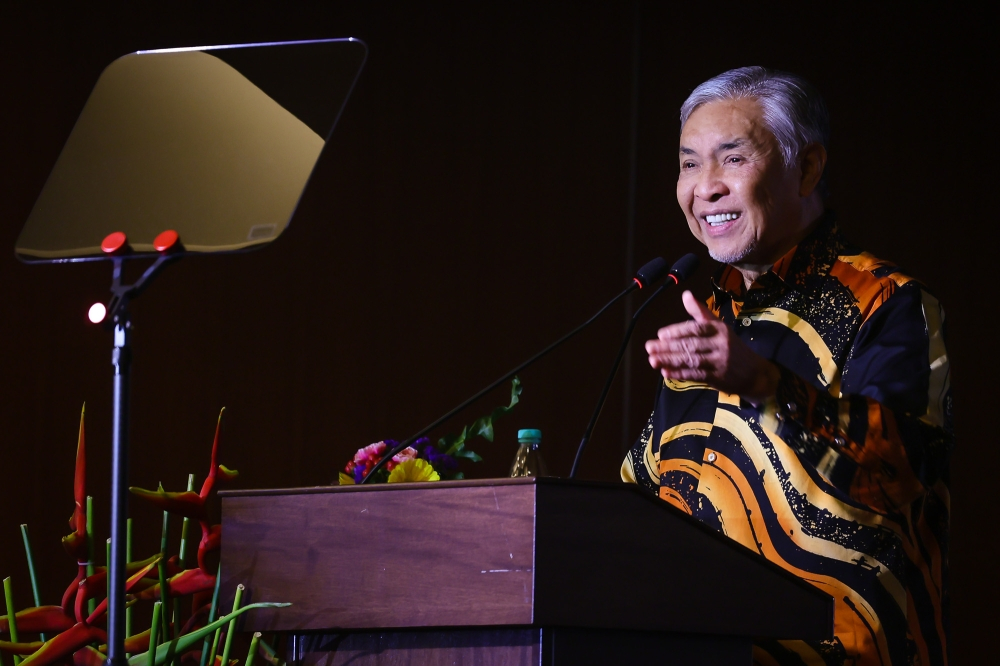
Barisan Nasional (BN) chairman Ahmad Zahid Hamidi has made his position clear ahead of the November 14 Melaka state election. BN intends to retain all 21 seats it won in 2021, leaving only seven constituencies open for negotiations with other parties.
At almost the same time, Perikatan Nasional (PN) secretary-general Takiyuddin Hassan declared that negotiations with potential partners were “around 100 per cent” complete, although he stopped short of naming them. He also confirmed that discussions over seat allocations were ongoing.
The two announcements point towards a possible electoral alliance, but they also expose a question that neither declaration answers. What is PN actually gaining from a deal in which BN has already drawn a firm line around most of the seats?
For BN, retaining 21 seats means defending the territory it won in the previous election. For PN, however, agreeing to negotiate over the remaining seven could mean accepting a considerably narrower field of electoral opportunities than BN's own position allows.
The issue is not whether political parties should cooperate. Seat-sharing is a legitimate electoral strategy, particularly when competing candidates could divide support.
The issue is whether the terms of that cooperation serve the people in the constituencies involved, or primarily the political calculations of those negotiating on their behalf.
A deal negotiated by leaders, decided by voters
BN's position is significant because the 21 seats it wants to retain represent three-quarters of Melaka's 28-seat state assembly. In the 2021 election, BN won 21 seats, while Pakatan Harapan (PH) secured five and PN took two.
Those results provide a clear explanation for BN's insistence on defending its seats. But a previous victory is not a permanent entitlement to a constituency.
Voters will still have to decide whether they want to return to the same party or choose a different candidate when they cast their ballots.
That distinction matters for PN, too.
If PN agrees to the proposed arrangement, the question is whether the seven seats available for negotiation offer a meaningful opportunity to contest on its own merits, or whether its role becomes largely dependent on what BN is willing to concede.
Zahid has said any negotiations would concern the seven seats not held by BN, leaving PN's component parties to determine how those constituencies should be distributed among themselves.
This means the negotiations are not simply about whether BN and PN can work together. They are also about how much electoral space each party is prepared to surrender, and whether the resulting arrangement gives voters a genuine choice.
An alliance may reduce competition between parties, but it does not automatically demonstrate that the agreement reflects the preferences of people living in the constituencies concerned.
Johor and Negeri Sembilan offer a precedent, not a blank cheque
The potential arrangement comes after BN and PN cooperation featured in the Johor and Negeri Sembilan state elections earlier this year. The political bargaining now taking place in Melaka tests whether that approach can be adapted to another state's circumstances.
Melaka presents a particularly clear test because BN is seeking to preserve the bulk of its existing seats while PN is expressing confidence that cooperation with other parties is nearly finalised.
The question is whether PN's confidence reflects an arrangement that gives its supporters meaningful representation, or whether securing an alliance has become a priority in itself.
Being included in a political deal is not the same as having an equal stake in it.
If power is the objective, where do voters fit in?
The public deserves more than assurances that negotiations are nearly complete.
PN's willingness to enter an alliance should therefore be examined alongside the actual terms of the deal. If the arrangement gives its candidates a credible opportunity to represent their constituencies, that is one consideration.
If it primarily limits competition in exchange for political accommodation, voters deserve to understand that trade-off as well.
The same scrutiny should apply to BN. Holding 21 seats gives the coalition a clear reason to defend its previous victories, but it does not exempt its decisions from questions about representation and accountability.
Ultimately, neither coalition can claim to speak for voters simply because its leaders have reached an agreement.
Melaka must be more than another seat-sharing exercise
With polling day approaching, the focus will inevitably turn to which parties contest which constituencies. But the more important issue is what those decisions mean for the people who will eventually vote.
If BN and PN proceed with an alliance, they should be prepared to explain why the arrangement makes sense for Melaka, beyond the interests of the parties involved. That means examining the candidates put forward, the concerns raised by local communities and the policies offered to address them.
Otherwise, the negotiations risk becoming an exercise in dividing electoral territory before voters have had their say.
PN may be confident that an alliance is almost certain. BN may be equally determined to retain its 21 seats. But neither position answers the question at the heart of this election. Is the arrangement being built around what Melaka's voters need, or around what its political leaders want to secure?
That is the standard by which any alliance should be judged. Not by how quickly the deal is finalised, or how neatly the seats are divided, but by whether voters remain at the centre of the political choices being made in their name.