
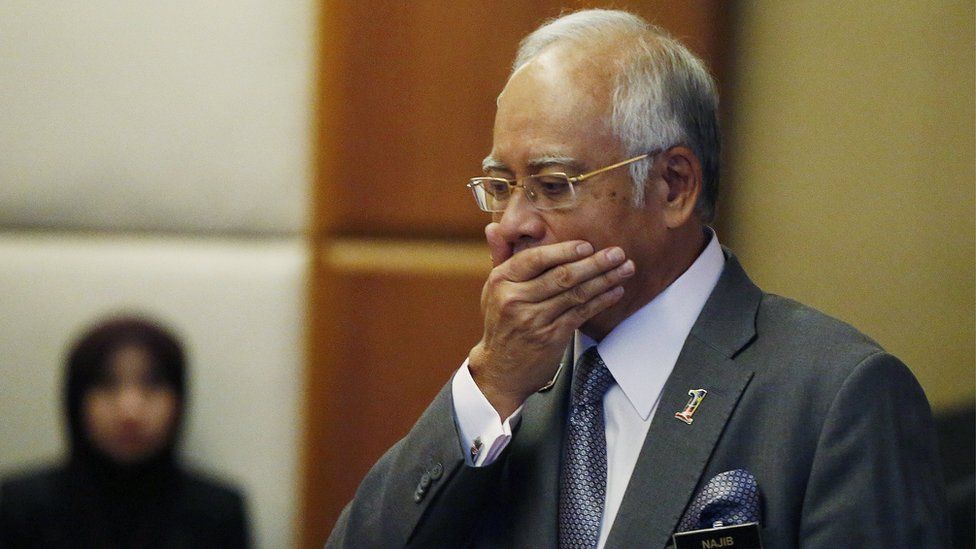
A Universiti Malaya (UM) student leader has sparked debate after questioning public donations to former prime minister Datuk Seri Najib Razak's solidarity fund during a dialogue with senior political figures, including two UMNO leaders, at the World Trade Centre Kuala Lumpur.
Ummi Umairah Bakhit criticised the public's willingness to contribute to the fund, which was established by UMNO to help Najib pay a court-imposed fine of RM50 million.
The fund reportedly collected more than RM630,000 within its first three hours of launch.
Her remarks have since gone viral, drawing both praise and criticism.
However, beyond the online reactions, her intervention raises a broader question about the role of public scrutiny in Malaysia's fight against corruption.
Speaking up matters when accountability is at stake
Questioning a political figure in a public forum takes a willingness to challenge established loyalties, particularly when the subject involves a leader who continues to command support.
Ummi's remarks concerned Najib's legal record, including his conviction in the SRC International case involving RM42 million.
Her question was not simply about whether people have the right to donate their money. They do.
It was about the implications of rallying financial support around a former national leader whose conviction has become part of Malaysia's wider conversation about corruption and political accountability.
The distinction matters. Malaysians are free to support the political figures they believe in, but that support should not place those figures beyond public scrutiny.
A functioning democracy depends on citizens being able to question those in power, examine their records and demand explanations. That responsibility does not disappear when a politician has loyal supporters or belongs to a party with a long history in government.
Khairy Jamaluddin, one of the panellists, also stressed the importance of discussing corruption openly, including when it involves political leaders.
His response reinforced the principle that wrongdoing should not be defended simply because of political allegiance.
Fighting corruption requires more than convictions
Malaysia's fight against corruption cannot rest on the courts and enforcement agencies alone.
While legal institutions are responsible for investigating and prosecuting offences, public scrutiny also plays a role in ensuring that questions of accountability remain part of the national conversation.
The willingness to question political leaders matters because corruption is not merely a legal issue. It also raises questions about public trust, the use of power and the standards expected of those entrusted with governing the country.
The fundraiser and the debate surrounding it provide an opportunity to examine how Malaysians reconcile political loyalty with the principle of accountability.
If the country is serious about addressing corruption, that conversation must remain possible regardless of whose political interests are involved.
The courage to ask should not be taken for granted
Ummi's remarks have attracted widespread attention, with some Malaysians praising her willingness to question the fundraiser while others criticised her approach. She has also reported facing online harassment and threats following the video's circulation, according to the New Straits Times.
Yet the significance of her intervention goes beyond the reactions to a viral clip.
It is easy to speak about fighting corruption in general terms. It is more difficult to raise specific questions when they involve influential political figures, established loyalties and issues that divide public opinion.
Ummi's decision to raise the subject in front of senior political leaders is a reminder of why that willingness matters. A society that wants greater accountability must leave room for uncomfortable questions, even when they challenge the views of those in the room.
She does not have to be right about everything for the questions she raised to deserve serious consideration. Nor should the public have to agree with her choice of words to engage with the substance of her argument.
Ultimately, the fight against corruption requires more than demanding accountability from those we already disagree with. It requires a willingness to uphold the same principle when the people being questioned are those we support.
Sometimes, that begins with one person willing to ask what others might prefer to leave unspoken.