
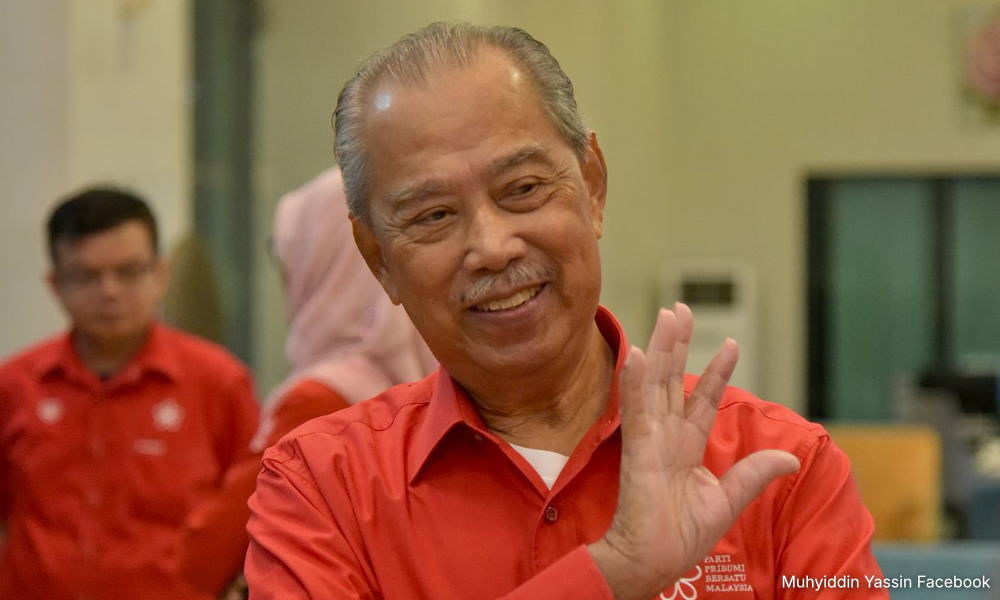
There is a particular kind of satisfaction that comes from outlasting people who underestimated you. Muhyiddin Yassin may not have planned it this way, but he is now in a position to enjoy it.
Perikatan Nasional is suspended. Its name and logo cannot be used. Its component parties are scrambling to figure out how to contest the Melaka election without the banner that was supposed to unify them. And the man who set the whole chain in motion is the man PAS spent the past year trying to marginalise.
How It All Happened
The sequence matters, because it explains why the collapse was so predictable and yet so complete.
Muhyiddin founded PN in 2020. Bersatu was the core. PAS was brought in as a partner, along with Gerakan and the Indian party. For a time, the arrangement worked. PN won seats, formed governments, and positioned itself as the alternative to both BN and PH.
But PAS was never content to be the junior partner. It had more parliamentary seats than Bersatu. It had stronger grassroots machinery. And when the opportunity came, it took control.
The opportunity was Hamzah Zainudin. In February 2026, Bersatu expelled its own deputy president, accusing him of attempting to unseat Muhyiddin. Hamzah formed Parti Wawasan Negara. PAS seized the moment.
By June, PAS had installed Ahmad Samsuri Mokhtar as PN chairman. Bersatu's representation on the PN Supreme Council was cut from six to four. PAS now held eight positions. The driver's seat had changed hands.
Then came the exclusions. Bersatu was not invited to the PN Supreme Council meeting on July 16 that finalised seat allocations for the Negeri Sembilan election. It was barred from using the PN banner in that election. It fielded 24 candidates under its own logo and lost deposits in 23 of them. Zero seats. The party that built PN was reduced to a political footnote.
And then, in September, Muhyiddin was not invited to the UMNO General Assembly. Not to the speeches. Not to the closed-door sessions. Not even to the sidelines. The founder of PN, the former prime minister, the man who once commanded the coalition that toppled a government — left standing outside the door while PAS leaders were ushered in.
That was the last straw.
The Complaint That Froze the Coalition
Bersatu filed a complaint with the Registrar of Societies. The ROS responded by ordering PN to suspend all activities and prohibiting the use of the PN name and logo until a final decision was reached.
Then, on October 20, 2026, the ROS preemptively cancelled the registration of Perikatan Nasional entirely. The decision came just two days before a scheduled October 22 High Court hearing that was meant to determine the coalition's legal status.
By acting before the court could rule, the registrar effectively changed the context of the dispute. The hearing no longer concerned a suspension. It concerned a coalition that no longer legally existed.
The appeal on October 22 was cancelled. There was nothing left to appeal.
Some will argue that the timing was political. The ROS acted just as Melaka was heading to the polls. There are those who will accuse the government of ulterior motives — and it is true that PN's collapse benefits the Unity Government. A divided opposition is easier to defeat than a united one.
But the complaint came from Muhyiddin. It came from Bersatu. It was not the government that brought PN down. It was the party that founded it, using the procedural mechanism available to any registered political party that believes its coalition has been improperly taken over. The ROS made the final call, but the trigger was pulled by the man PAS had tried to sideline.
That is the irony PAS did not anticipate. It assumed Bersatu had no recourse. It assumed that control of the leadership meant control of the brand. It assumed wrong.
The Biggest Loser
If Muhyiddin is quietly enjoying the view, the biggest casualty is Wawasan.
The party was built to be the bridge between UMNO and PAS. Hamzah positioned it as the middle path — a party that could speak to both sides, facilitate cooperation, and claim credit for the resulting unity. It was a coherent strategy for a party with no history, no grassroots, and no natural constituency.
That strategy has been overtaken by events.
UMNO and PAS are now negotiating directly. Tok Mat's speech at the UMNO general assembly was a signal that UMNO wants a direct relationship with PAS, without intermediaries. And Hamzah was not invited to the assembly at all. Wawasan's entire reason for existing — to connect the two parties that no longer need connecting — has evaporated.
The party won three of four seats in Negeri Sembilan, an impressive debut for a party registered just seven weeks before the election. But those victories were achieved under the PN banner, with PAS machinery supporting them. In Melaka, Wawasan will have to prove that its brand has independent value.
Even if PAS wants to carry Wawasan through the election — even if PAS is willing to share seats, resources, and campaign infrastructure — it cannot do so under the PN flag. The ROS has prohibited the use of the name and logo. Wawasan can run under PAS's moon symbol. But that is PAS's brand, not Wawasan's.
Wawasan wanted to be the bridge. It ended up being the road that nobody used.
What Comes Next
A new coalition will rise. That is almost certain. Malaysian politics has a way of producing new vehicles when old ones break down. The parties that made up PN — PAS, Bersatu, Wawasan, Gerakan, the Indian party — have incentives to coordinate, and coordination requires a framework.
But it will not be PN again. The name is tainted by the suspension. The brand has been contested and frozen. The founder has walked away from it. Whatever replaces it will be a new entity, with a new name, a new logo, and a new set of internal contradictions to manage.
The electoral damage may be less severe than the drama suggests. BN and PAS cooperation is still functioning. In Negeri Sembilan, the BN-PN arrangement delivered a decisive victory precisely because it prevented a split in the Malay vote. That cooperation can continue without the PN banner. It can happen through direct negotiation, seat-sharing agreements, and informal understandings.
The loss of PN is a branding problem, not a structural one. The pieces are still on the board. They just cannot be assembled under the same flag.
The Lesson
Muhyiddin Yassin founded a coalition, lost control of it, and then made sure nobody else could use it. That is not a victory in any conventional sense. PN is not coming back. Bersatu is not returning to power. The coalition that once dominated Malay politics is now a memory.
But there is a certain logic to it. If you cannot have the thing you built, you can at least ensure that the people who took it from you cannot enjoy it either.
PAS wanted PN. PAS took PN. PAS thought it had won. And now PAS is staring at a coalition it controls but cannot use, a bridge it built but cannot cross, and an election it must fight without the banner it spent a year trying to claim.
Muhyiddin may not be in power. But he is not the one explaining to voters why the coalition they voted for no longer exists.