
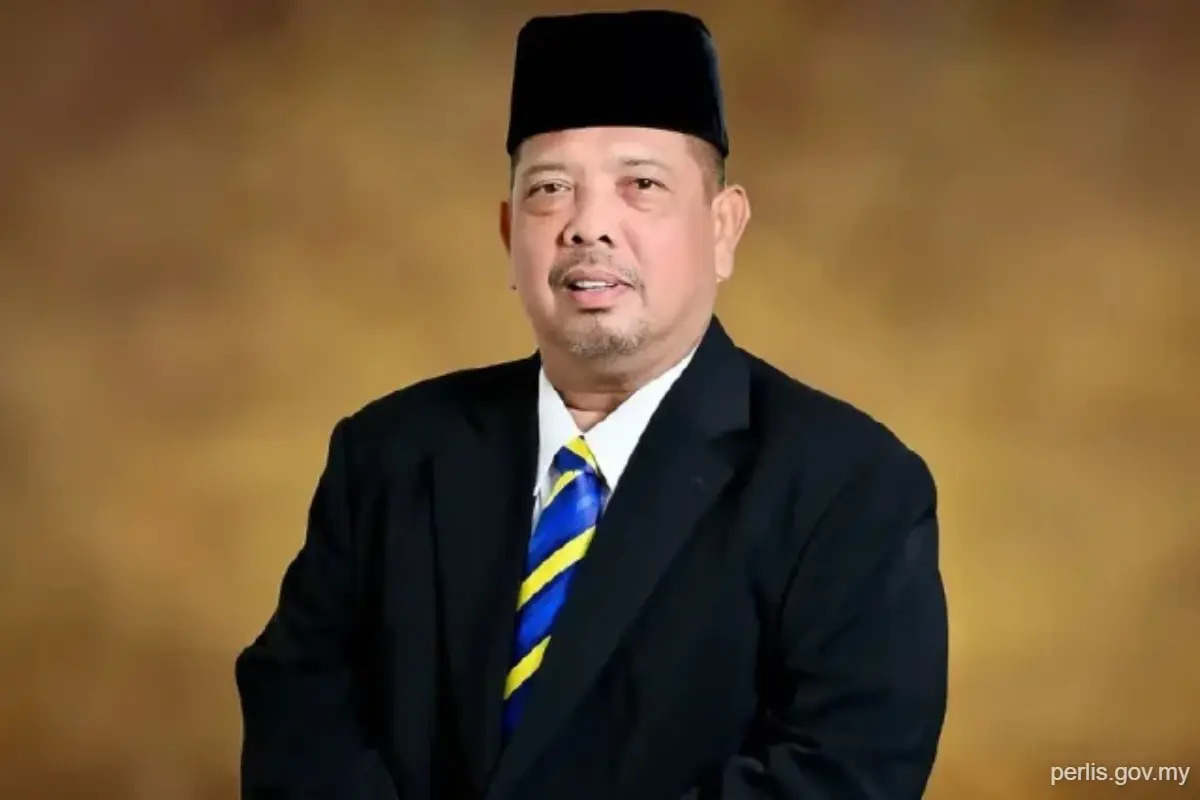
Bersatu’s suspension of Perlis Menteri Besar Abu Bakar Hamzah has raised questions over the state government’s political stability, with the party’s next move and the position of PAS assemblymen emerging as key factors in determining what happens next.
The suspension, confirmed by Perlis Bersatu chairman Izizam Ibrahim on October 21, bars Abu Bakar from exercising his party membership rights for two party election terms.
The decision took effect on October 13, according to a notice dated October 14 and signed by Bersatu Disciplinary Board chairman Mohd Radzi Manan.
Abu Bakar, who is also the Kuala Perlis assemblyman and Bersatu’s Kangar division chief, has been stripped of all his party positions and barred from making statements on behalf of Bersatu throughout the suspension period.
The disciplinary action reportedly followed alleged breaches of Clause 9.1.4 of the party’s constitution and its Members’ Code of Ethics and Conduct.
Abu Bakar has been given 14 days from the date of the notice to appeal to the party’s Appeals Board.
However, the suspension does not automatically remove him from the office of Menteri Besar, leaving his political position and the administration of Perlis as separate matters to watch.
Abu Bakar to appeal, says administration will continue
On October 22, Abu Bakar said he would appeal against the disciplinary decision through the party’s prescribed procedures.
He acknowledged the decision but maintained that his suspension was an internal party matter that would not affect his position as Menteri Besar or disrupt the state administration.
He said he would continue governing in accordance with the Perlis state constitution.
His response comes after Izizam said the state party leadership was waiting for a decision from Bersatu’s central leadership and the position of PAS assemblymen in Perlis.
Izizam also suggested that Abu Bakar should voluntarily relinquish the Menteri Besar position, saying a leader who adhered to the principles of a gentleman would do so.
However, he indicated that he was still awaiting instructions from the party’s central leadership.
The differing positions leave the next steps uncertain.
While the disciplinary board has acted against Abu Bakar as a party member, the question of his leadership of the state government involves a separate political and constitutional process.
PAS assemblymen could be crucial
Perlis State Assembly Speaker Rus’sele Eizan said on October 21 that the state administration was continuing as usual despite the suspension.
He also noted that Abu Bakar’s position as Menteri Besar depended on the stance of the six PAS assemblymen in the state.
Rus’sele said he had not received any official notification concerning further developments at the time.
Their position is significant because the suspension has not, by itself, established that Abu Bakar has lost the support required to remain in office.
The immediate question is therefore not simply whether Bersatu wants Abu Bakar to step down, but whether any subsequent political developments affect his ability to command the necessary confidence in the state assembly.
Until there is a formal development concerning his position, the suspension alone should not be treated as confirmation that Perlis will have a new Menteri Besar.
Party discipline versus the responsibility to govern
The dispute highlights a distinction in Malaysian politics. A party’s authority over its members is not identical to the constitutional process governing a state’s chief executive.
Bersatu can impose disciplinary action under its party rules, but the consequences for Abu Bakar’s state leadership cannot be determined solely by the suspension notice.
His position must be considered under the Perlis state constitution and the applicable requirements concerning the confidence of the state assembly.
This distinction matters because political uncertainty can generate questions about government continuity even when the machinery of administration continues operating.
For residents, the central concern is whether the dispute remains an internal party matter or develops into a leadership change that affects the state government.
The administration’s ability to continue its work, alongside clear communication from the relevant political leaders, will be important as the appeal process unfolds.
The case also places Bersatu’s central leadership in a position where it must clarify its next steps.
A decision on the appeal, further disciplinary action or a change in the party’s position could influence the political direction of the dispute.
For now, Abu Bakar has said he intends to appeal and continue governing, while the state assembly speaker has reported that administration is proceeding as usual.
The next decisive developments will be the outcome of Abu Bakar’s appeal, Bersatu’s position on his leadership and whether he continues to command the necessary support in the Perlis state assembly.
Until those questions are resolved, the suspension remains a significant party dispute, but not an automatic change of government.