
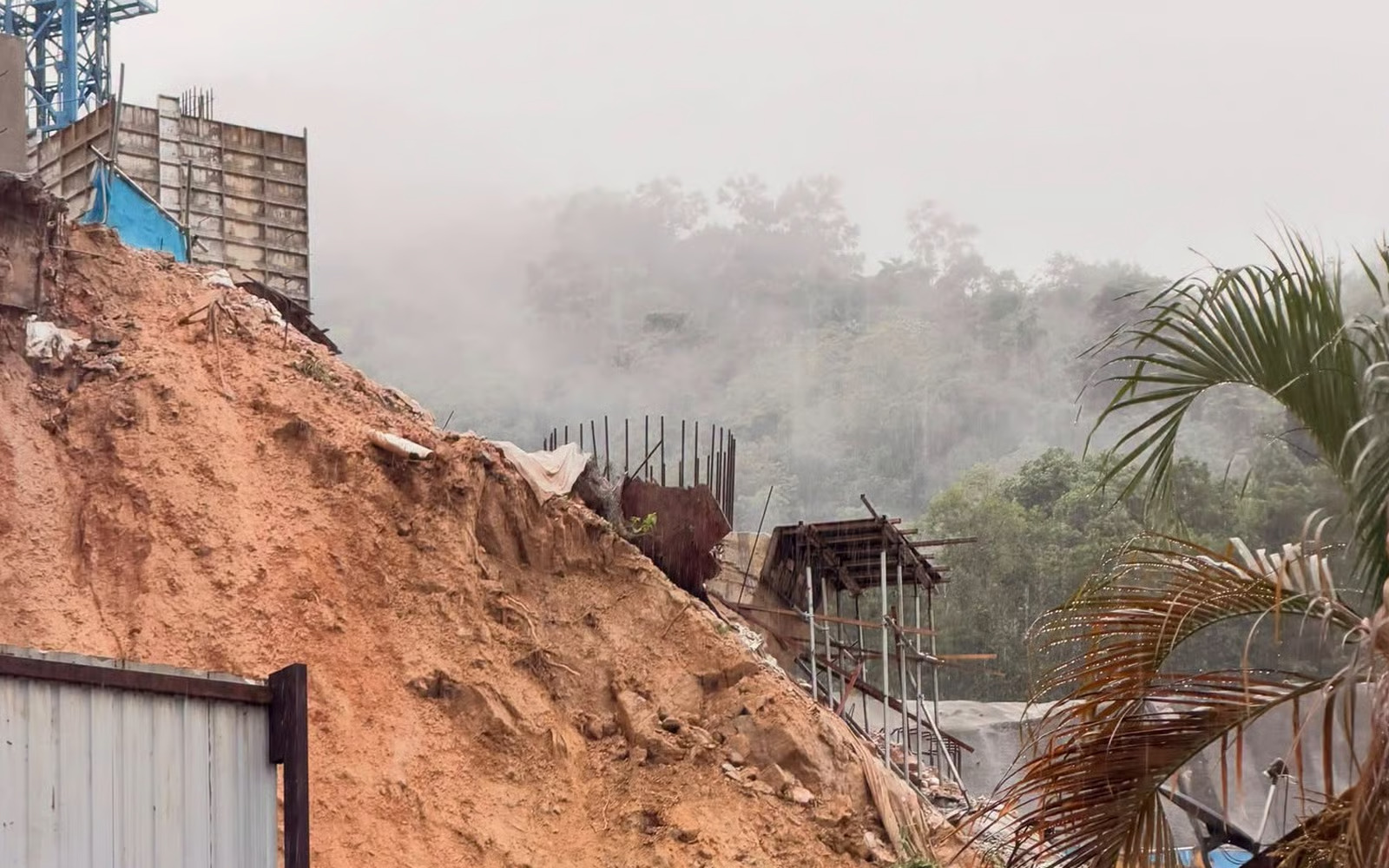
The death of a 73-year-old doctor in a landslide in Paya Terubong has renewed concerns over hillside development in Penang, raising questions about whether enough is being done to protect communities living near vulnerable slopes.
Dr Wong Kar Lin was killed on Oct 25 when a landslide struck the back of his home in Taman Seri Rambai. His wife and mother-in-law escaped, while six nearby houses were identified as unsafe and their occupants advised to evacuate temporarily.
The Penang Island City Council (MBPP) has ordered a nearby condominium and road construction project to stop work pending further investigation.
The project, which has been underway for more than a year, also involves slope stabilisation works.
While the cause of the landslide remains under investigation, the incident has drawn renewed attention to the risks associated with construction on Penang's hillsides.
Sahabat Alam Malaysia (SAM) president Meenakshi Raman said residents and environmental groups had repeatedly warned about the dangers of hillside development in the area, citing extensive hill cutting and the risks posed to nearby homes.
She also questioned whether the authorities had adequately monitored the slopes and ensured that appropriate protective measures were in place.
Her concerns raise an important question. How effectively are the risks of hillside development being managed, particularly when construction takes place close to established residential areas?
Development must not come at the expense of public safety
Penang's limited land area and growing demand for housing and infrastructure make development pressures a persistent challenge.
However, the suitability of a site for construction cannot be considered separately from the safety of the people living around it.
Hillside construction requires careful assessment of ground conditions, effective drainage, slope stabilisation and ongoing monitoring.
These measures are particularly important during periods of heavy rainfall, when water infiltration and poor drainage can contribute to slope instability.
The danger is not confined to construction workers or the development site itself.
When slopes fail, the consequences can extend to neighbouring homes, roads and communities that may have little control over the activities taking place nearby.
This makes effective oversight essential.
Approval for a development should not be the end of the safety process. Conditions at a site can change as earthworks progress, drainage systems are affected and slopes are exposed to the elements.
Authorities must therefore ensure that safety requirements are followed throughout construction, with timely inspections and intervention when potential hazards emerge.
Warnings must translate into preventive action
SAM's claim that concerns had been raised repeatedly deserves careful examination.
The investigation should establish what warnings were made, whether they related to the affected slope, what action was taken and whether any shortcomings contributed to the incident.
At the same time, the presence of a nearby construction project does not, by itself, establish that it caused the landslide. That connection must be determined through a proper technical investigation.
The immediate priority is to ensure that affected residents can return home only when it is safe to do so, while the authorities assess the stability of the surrounding slopes and address any remaining hazards.
Beyond the immediate response, the findings must inform decisions about future hillside development and the monitoring of existing sites.
Where negligence or breaches of safety requirements are established, appropriate action must follow.
The death in Paya Terubong is a reminder that the consequences of slope failure can reach far beyond a construction boundary.
Protecting communities requires more than responding after disaster strikes; it requires identifying risks early, enforcing safeguards consistently and acting on credible warnings before lives are put in danger.
As the investigation proceeds, the central question is not simply what caused this landslide, but what can be done to prevent another tragedy.