
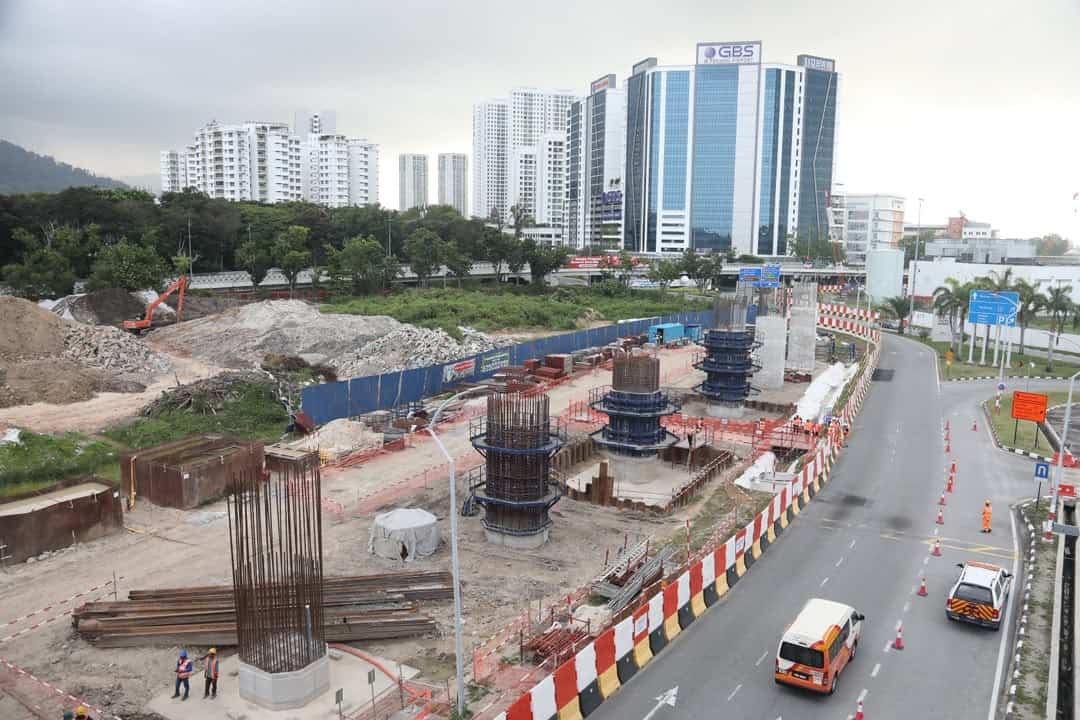
Penang's Mutiara Light Rail Transit (LRT) project has reached 15.5% physical progress, with RM397.07 million in subcontracts awarded to 150 local small and medium enterprises (SMEs), contractors and suppliers.
While the contracts have created immediate opportunities during construction, the longer-term economic potential of the LRT could extend much further, particularly for local businesses looking to attract more customers, reach new markets and expand their operations.
With the project targeted for completion and commencement of operations in December 2031, the question is how Penang's SMEs can benefit once the trains begin carrying passengers.
As of September 2026, Civil Main Contractor Package 1 (CMC1), covering the 23.7km alignment from KOMTAR to Station A1 on Silicon Island, had recorded 15.5% physical progress.
The project is expected to connect key destinations across the island, including George Town's city centre, Penang International Airport, the Bayan Lepas Free Industrial Zone (FIZ) and major residential and commercial areas.
This connectivity could create opportunities for businesses located near stations, as improved access may bring more people within reach of shops, restaurants, services and other commercial establishments.
More commuters could mean more customers
One of the most direct ways the LRT could benefit SMEs is by improving customer access to local businesses.
For small retailers, cafes, restaurants and service providers, attracting customers often depends not only on their products and prices but also on how conveniently people can reach their premises.
A reliable rail network could make it easier for commuters, workers and visitors to travel between different parts of Penang without relying entirely on private vehicles.
Businesses located near LRT stations could potentially benefit from increased foot traffic, particularly those offering everyday services such as food and beverages, convenience retail, personal care and other consumer services.
Similarly, visitors arriving through Penang International Airport could have easier access to commercial areas along the rail network, potentially creating additional opportunities for tourism-related SMEs.
However, increased passenger numbers will not automatically translate into higher sales. Businesses must also be accessible from stations, while pedestrian routes, signage and surrounding facilities will influence whether commuters actually visit nearby establishments.
New opportunities around LRT stations
Beyond bringing customers closer to existing businesses, the LRT could also encourage the development of new commercial activities around its stations.
This is particularly relevant to transit-oriented development (TOD), which integrates public transport with residential, commercial, recreational and community facilities.
Penang is already exploring this approach through the proposed Sungai Nibong TOD project, which aims to transform the former Penang Fair grounds and surrounding areas into an integrated transport and community hub.
The proposed development will incorporate residential units, commercial spaces, recreational facilities, public spaces and transport infrastructure.
According to reports, the wider development is projected to accommodate approximately 3,600 residents and support up to 38,000 workers upon completion.
For local SMEs, this could create opportunities to establish businesses within a growing commercial and residential district.
Food and beverage operators, convenience stores, service providers and other retailers could potentially benefit from demand generated by residents, workers and visitors using the surrounding facilities.
The proposed development also presents an opportunity to create a more consistent customer base rather than relying solely on occasional visitors.
The state has also indicated that the Sungai Nibong development could introduce a year-round commercial and cultural destination, allowing activities associated with the annual Penang Fair to continue through a refreshed concept.
This could create additional opportunities for local food operators, retailers, event organisers and small businesses to participate in commercial activities throughout the year.
However, the actual benefits will depend on how commercial spaces are allocated, their rental costs and whether smaller businesses can afford to operate within these developments.
SMEs could reach a wider workforce and talent pool
Another potential benefit is improved access to employment opportunities and a wider workforce.
Penang's economy relies heavily on its manufacturing, services and tourism industries, with many businesses operating across different parts of the island.
By connecting residential areas with commercial and industrial hubs, the LRT could make it easier for workers to commute between their homes and workplaces.
For SMEs, particularly those facing difficulties attracting and retaining employees, better public transport connectivity could widen the pool of potential workers.
This could be particularly relevant to businesses in the food and beverage, retail, hospitality and service industries, where employees may need to travel across the state to reach their workplaces.
Improved connectivity could also make it easier for business owners to meet suppliers, attend appointments and coordinate operations across different commercial areas.
In the longer term, these improvements could support business productivity by reducing some of the time and transport difficulties associated with operating in a congested urban environment.
The official Mutiara Line project information also identifies improved access to industrial and commercial areas as one of the expected economic benefits of the railway.
Better connectivity could support Penang's tourism SMEs
The LRT could also create opportunities for small businesses operating within Penang's tourism industry.
Local tourism businesses, including tour operators, independent retailers, food vendors and accommodation providers, could benefit from improved connections between major destinations.
For example, visitors arriving at Penang International Airport could potentially use the LRT to reach commercial areas and other destinations along the network.
This could make it easier for tourists to explore different parts of the island without having to depend entirely on taxis, private vehicles or organised transport services.
Smaller businesses that may not be located within established tourist districts could also gain greater exposure if their surrounding areas become more accessible.
However, accessibility alone will not guarantee that tourists visit these businesses. Clear tourist information, convenient station access and connections to popular attractions will remain important.
The state and tourism industry players could also explore ways to promote local businesses along the LRT network, including through travel guides, station information and tourism packages.
Making sure smaller businesses are not left behind
Despite the potential opportunities, the economic benefits of the LRT will not necessarily be distributed equally among local businesses.
Businesses located close to stations or within major commercial developments may enjoy greater exposure, while those further away could see fewer direct benefits.
There is also the possibility that improved accessibility and increased commercial activity could push up rental and property costs around popular stations.
For smaller retailers and independent operators, higher rental expenses could make it difficult to maintain their businesses in areas that become more commercially attractive.
This means the state must consider how to ensure that local SMEs can participate in the economic activity generated by the railway.
Better feeder bus services, pedestrian infrastructure and connections to surrounding commercial areas would help extend the benefits beyond businesses located immediately beside stations.
The development of affordable commercial spaces and opportunities for smaller businesses to participate in station-area developments could also help ensure that economic gains are not concentrated among larger property owners and established retail operators.
The state could further support local SMEs through business development programmes, digital marketing initiatives and partnerships with tourism and commercial organisations to help them capitalise on the expected increase in mobility.
Measuring the LRT's economic impact beyond construction
The RM397.07 million in subcontracts awarded to 150 local SMEs, contractors and suppliers demonstrates how the Mutiara LRT is already creating opportunities during its construction phase.
However, the railway's longer-term economic contribution should also be assessed through the opportunities it creates once operations begin.
Beyond passenger numbers and transport efficiency, the state could examine whether businesses near stations experience increased customer traffic, whether more SMEs establish themselves around commercial hubs and whether improved connectivity helps businesses attract workers and reach new markets.
These outcomes would provide a clearer picture of how infrastructure investment translates into economic benefits for local communities.
The Mutiara LRT is expected to become an important part of Penang's transport network when it begins operations in December 2031.
But its potential should not be limited to moving commuters between stations.
If supported by accessible commercial spaces, effective transport integration and opportunities for local businesses, the railway could help create new economic activity across the state.
Ultimately, the real test will be whether Penang's SMEs can turn improved connectivity into more customers, stronger businesses and sustainable growth long after the construction contracts have ended.