
The Malaysian Communications and Multimedia Commission's (MCMC) decision not to interfere directly in political parties' online campaigns during the Melaka election has raised questions about electoral fairness, particularly as misinformation, fake accounts and AI-generated content become increasingly common.
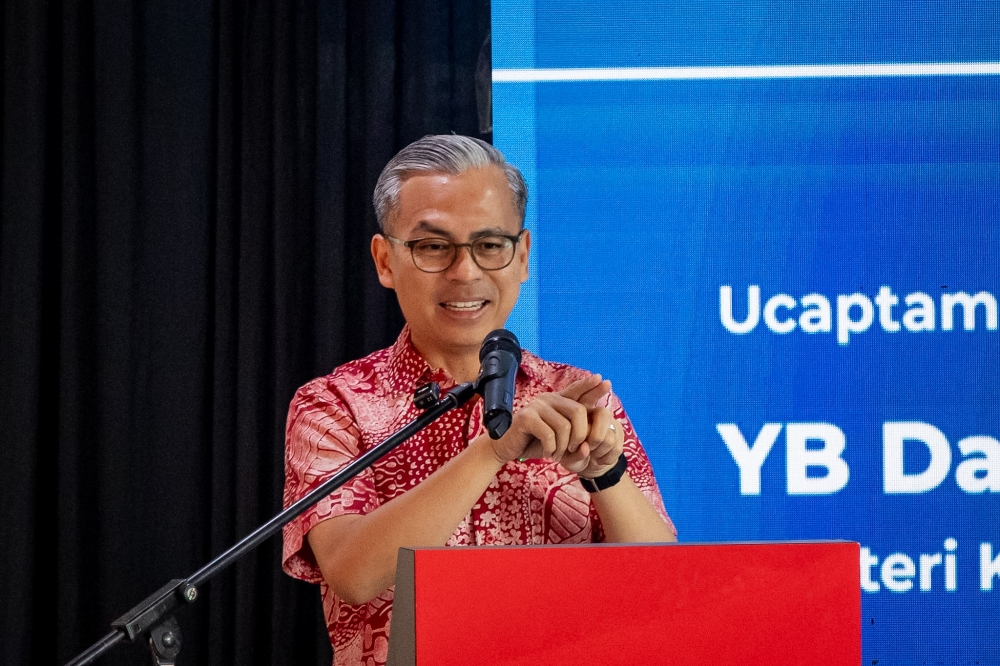
Communications Minister Fahmi Fadzil said on November 1 that MCMC would monitor online activity but initiate investigations or enforcement action following public complaints.
He highlighted concerns involving deepfakes, fake accounts, misinformation and highly offensive content.
While the approach allows political parties to campaign freely on digital platforms, it also raises an important question. Are existing monitoring and complaint mechanisms sufficient to prevent online manipulation from influencing voters?
Social media has become a major campaign tool, allowing political parties to reach specific audiences, amplify selected narratives and distribute content rapidly.
More importantly, the information voters encounter online can shape their perceptions of candidates and influence their decisions at the ballot box.
Digital campaigns can influence voters
The influence of targeted political advertising was examined in a 2025 study published in the European Journal of Political Economy, which investigated Facebook's role in the 2016 United States presidential election.
Researchers found that exposure to Facebook's micro-targeted political advertisements influenced voting preferences among certain groups, with Donald Trump's campaign emerging as the primary beneficiary.
The findings do not establish that Facebook alone secured Trump's victory, but demonstrate how digital advertising can influence voter behaviour and give campaigns an advantage in shaping political narratives.
Malaysia has also experienced the impact of online political campaigning.
During the 15th General Election (GE15) in 2022, social media became a major platform for political messaging, including content that exploited racial and religious sensitivities.
An analysis by the Centre for Independent Journalism, cited by the ISEAS – Yusof Ishak Institute, found that messages involving common hate speech subjects across TikTok, Facebook, X and YouTube nearly doubled to 99,563 between October 20 and November 2022, compared with 55,000 messages recorded between August 16 and September 30.
The election also saw conspiracy narratives targeting political candidates, including claims portraying Chinese candidates as communists and warnings of racial conflict following the announcement of a hung Parliament.
Meanwhile, Freedom House's Freedom on the Net 2024 report identified networks of suspected fake social media accounts linked to political groups ahead of the August 2023 state elections.
These examples show that online election manipulation is not limited to fabricated videos. Coordinated messaging, fake accounts and misleading narratives can also distort public perceptions and create the impression of widespread support for particular political positions.
AI makes political manipulation harder to detect
The growing accessibility of artificial intelligence (AI) adds another challenge.
AI-generated images, videos and audio recordings can make political candidates appear to say or do things they never actually did.
Melaka has already seen an example ahead of the upcoming election.
In September 2026, Melaka PKR clarified that a viral AI-generated poster featuring its leaders was not officially issued by the party or Pakatan Harapan.
The incident demonstrated how political material can circulate without authorisation, potentially confusing voters about official campaign announcements.
MCMC's enforcement figures also highlight the scale of the issue.
Between January 2025 and September 15, 2026, social media platforms removed 713 deepfake videos and manipulated images involving political party leaders following requests from MCMC.
Separately, between January and June 2026, MCMC submitted 13,122 removal requests involving image manipulation and deepfake technology, with 12,353 successfully removed. These figures cover broader online content, not exclusively political material.
However, removing manipulated content after it has circulated does not necessarily undo its influence. A fabricated video may already have reached thousands of users through reposts and private messaging groups before authorities take action.
Public complaints may not be enough
Fahmi's statement raises questions about whether relying on public complaints provides sufficient protection during an election campaign.
While public reporting is important, not every voter can identify a deepfake, recognise coordinated accounts or distinguish manipulated content from genuine political material.
There is also the issue of timing. By the time a complaint is submitted and investigated, misleading content may already have influenced public perceptions.
MCMC's active monitoring must therefore go beyond waiting for reports. Identifying coordinated manipulation, responding promptly to credible threats and ensuring transparent enforcement are equally important.
Malaysia already has regulatory measures addressing online harms, including amendments to the Communications and Multimedia Act 1998 and the Online Safety Act 2025, which took effect on January 1.
However, election-related content requires particular attention because misleading political material can affect how voters assess candidates and make decisions.
This does not mean every controversial statement or political criticism should be investigated. Political parties must remain free to challenge opponents, question policies and express differing opinions.
But deliberate fabrication, impersonation and coordinated attempts to mislead voters should not be treated as ordinary political campaigning.
Enforcement must also be consistent regardless of which political party benefits from the content.
Ultimately, the integrity of an election depends not only on voters having the freedom to choose, but also on having access to information that allows them to make informed decisions.
MCMC does not need to control political campaigns. However, it must ensure that its hands-off approach does not leave voters exposed to online manipulation.
As election campaigning becomes increasingly digital, protecting electoral fairness must involve more than removing harmful content after complaints are received.
Political parties should compete for voters' support, not gain an advantage by manipulating the information voters rely on to make their choices.